
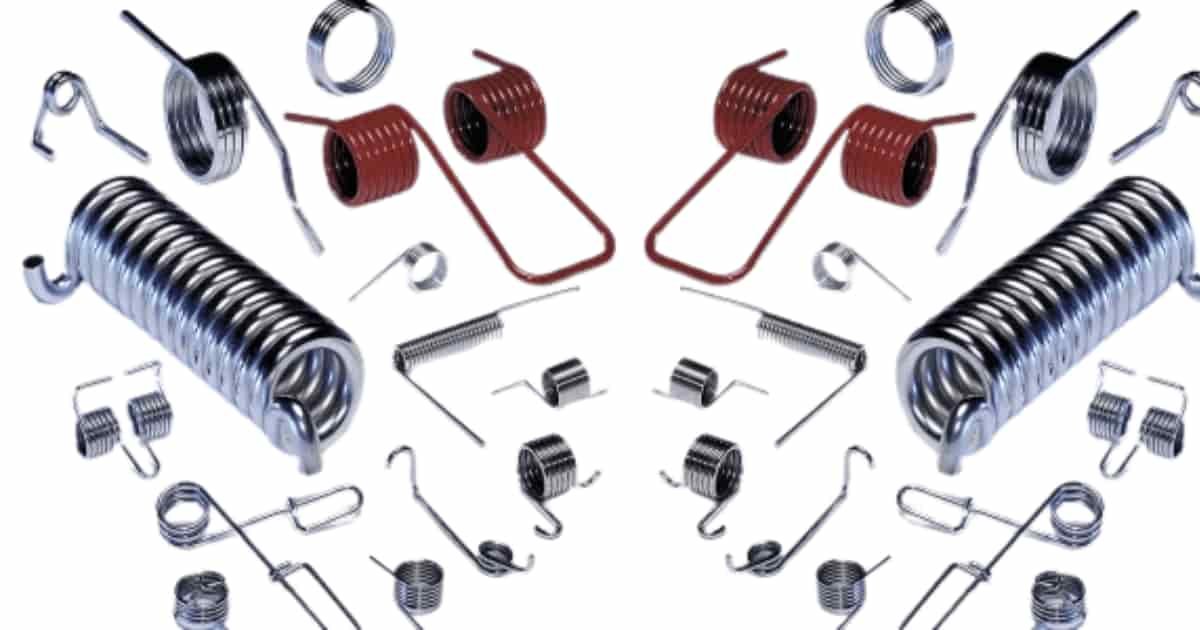
Torsion Spring Design
Torsion springs are ingenious helical devices designed to store and apply rotational force, commonly known as torque. Unlike their compression or extension counterparts, these springs operate by bending in response to applied torque. Their unique functionality makes them indispensable across a vast array of applications, from everyday items like clothespins and hinges to complex industrial machinery and precision mechanical devices. Understanding the nuances of torsion spring design is crucial for engineers and manufacturers seeking optimal performance and reliability in their products.
Understanding Torsion Springs
At their core, torsion springs are wire springs coiled into a helix. Their primary purpose is to exert torque when their angular deflection changes. This is achieved by the spring's legs moving in an arc around the spring's axis. The way the spring is coiled – either clockwise or counterclockwise – is a fundamental aspect of its design, dictating how it will react to applied force and how it should be installed.
The force exerted by a torsion spring is not linear but rather a measure of torque. This torque is directly influenced by the spring's geometry, material properties, and the degree of angular deflection. When designing a torsion spring, engineers must meticulously consider the forces it will encounter, the desired range of motion, and the operational environment to ensure longevity and consistent performance.
Diverse Applications of Torsion Springs
The versatility of torsion springs lends them to an extensive range of applications across numerous industries. Their ability to apply controlled rotational force makes them ideal for mechanisms requiring a return action or a specific angular positioning.
Doors and Hinges
Used in garage doors for counterbalance and in various types of hinges to facilitate smooth opening and closing.
Clothespins and Small Mechanisms
The classic example, providing the gripping force to hold clothes on a line.
Industrial Equipment
Essential components in machinery where rotational control or return force is needed.
Counterbalance Systems
Providing calibrated rotational force to offset weight or maintain a specific position.
Precision Devices
Found in optical equipment, medical devices, and intricate instruments requiring precise angular movement.
Key Factors in Torsion Spring Design
Effective torsion spring design involves a careful balance of several critical parameters. Each element plays a role in determining the spring's performance, durability, and suitability for its intended application. At Durga Spring Industries, we focus on these vital aspects to deliver precision-engineered solutions.
Wire Diameter and Material
The wire diameter is perhaps the most fundamental aspect of torsion spring design. It directly dictates the spring's torque capacity and stiffness. Larger diameters generally translate to higher torque. The choice of material is equally important, influencing the spring's strength, fatigue life, and resistance to environmental factors. Common materials include Music Wire, Chrome Silicon, Chrome Vanadium, and various grades of Stainless Steel, each offering distinct advantages.
Angular Deflection and Stress
Torsion springs are subjected to bending stress. The amount of angular deflection the spring can withstand without permanent deformation or failure is a critical design limit. It's important to consider the direction of deflection: applying torque in a direction that closes the coils is generally favorable due to residual forming stresses, while opening the coils can be detrimental. The maximum permissible deflection must be calculated to avoid overstressing the material.
Coil Diameter and Leg Configuration
The inner and outer diameters of the spring coils affect how the spring fits within its housing or onto a mandrel. The mandrel size, upon which the spring operates, should typically be no more than 90% of the spring's inside diameter at full deflection to prevent binding. The length and angle of the spring's legs are also crucial, as they determine how the spring interfaces with the components it actuates and transmit the torque effectively.
Direction of Wind and Coil Spacing
The direction of wind (clockwise or counterclockwise) is a non-negotiable specification that must be clearly defined. This ensures correct installation and operation. To minimize hysteresis, which is the loss of load over time or repeated cycles, torsion springs can be designed with space between adjacent coils, allowing for controlled movement without significant energy loss.
Choosing the Right Torsion Spring
Selecting the appropriate torsion spring requires a thorough understanding of the application's demands. By considering the following factors, you can ensure you specify a spring that meets your exact requirements:
1. Define Torque Requirements
Accurately determine the required torque at specific angular positions. This often involves calculating the forces the spring needs to overcome or generate.
2. Specify Angular Travel
Outline the total angular deflection needed for the spring's operation. Consider both the minimum and maximum angles and the direction of deflection.
3. Determine Leg Configuration
Decide on the type and length of the spring legs. They need to be designed to integrate seamlessly with the surrounding components.
4. Consider Environmental Factors
Assess the operating temperature, humidity, and potential exposure to corrosive elements. This will influence the choice of spring material.
5. Mandrel and Housing Dimensions
Provide precise dimensions for the mandrel or shaft the spring will mount on, and the space it will occupy.
6. Direction of Wind
Clearly state whether a clockwise or counterclockwise wound spring is required.
Buyer Insight: Anticipating Torque Variations
Torque measurements for torsion springs can sometimes be inconsistent due to manufacturing tolerances and the nature of bending stress. When precision is paramount, consider working with a manufacturer like Durga Spring Industries that employs advanced quality control and can provide springs with tightest possible tolerances for consistent performance.
Expertise in Torsion Spring Manufacturing at Durga Spring Industries
With 15 years of experience in manufacturing high-quality springs and precision components, Durga Spring Industries is equipped to meet diverse torsion spring needs. Our modern manufacturing facility, located in Ahmedabad, Gujarat, is outfitted with advanced CNC machines and automation technology. This allows us to produce springs with exceptional precision and consistency.
Our CNC spring coiling machines are capable of handling wire sizes ranging from 0.15mm to 10.00mm, enabling us to produce a wide spectrum of torsion springs. With a monthly production capacity exceeding 2.1 million springs, we are well-positioned to handle both small-batch custom orders and large-scale production runs, ensuring timely delivery without compromising on quality. We are committed to providing reliable, custom-engineered torsion springs that precisely match your application's unique demands.
Quality Assurance in Torsion Spring Production
Ensuring the quality and reliability of torsion springs is paramount, especially given the critical role they play in many mechanisms. At Durga Spring Industries, quality is integrated into every stage of our manufacturing process. We employ rigorous testing and inspection protocols to verify that each spring meets the specified design parameters and performance standards.
Our commitment to quality extends from material selection and process control to final inspection. By utilizing advanced CNC machinery and adhering to strict manufacturing practices, we minimize variations and ensure that our torsion springs deliver consistent torque, precise deflection, and long operational life. We understand that the performance of your end product often depends on the reliability of its components, and we take that responsibility seriously.
Frequently Asked Questions about Torsion Springs
What is the primary function of a torsion spring?
The primary function of a torsion spring is to store and apply rotational force (torque) when it is deflected by an angle. It operates by the twisting of its coils.
How is torque measured for a torsion spring?
Torque for a torsion spring is typically measured at specific angular positions. It's important to note that torque measurements can sometimes have variations, and precise specification is key.
What is the difference between a clockwise and counterclockwise torsion spring?
The direction of wind refers to whether the spring coils close when rotated clockwise (clockwise wound) or counterclockwise (counterclockwise wound). This is crucial for correct installation and operation.
What can cause a torsion spring to fail prematurely?
Premature failure can be caused by exceeding the maximum allowable deflection, applying torque in the wrong direction (opening coils instead of closing them), improper installation, or operating in a corrosive environment without appropriate material selection.
Can I use a torsion spring in a tension or compression application?
While a torsion spring stores energy through twisting, it is designed specifically for torque applications. Using it for tension or compression would not be appropriate and could lead to failure.
Ready to Design Your Custom Torsion Spring?
Partner with Durga Spring Industries for precision-engineered torsion springs that meet your exact specifications. Our experienced team is ready to help you select the optimal design, material, and configuration for your application. Contact us today to discuss your project and receive a tailored solution.
Get a Quote