
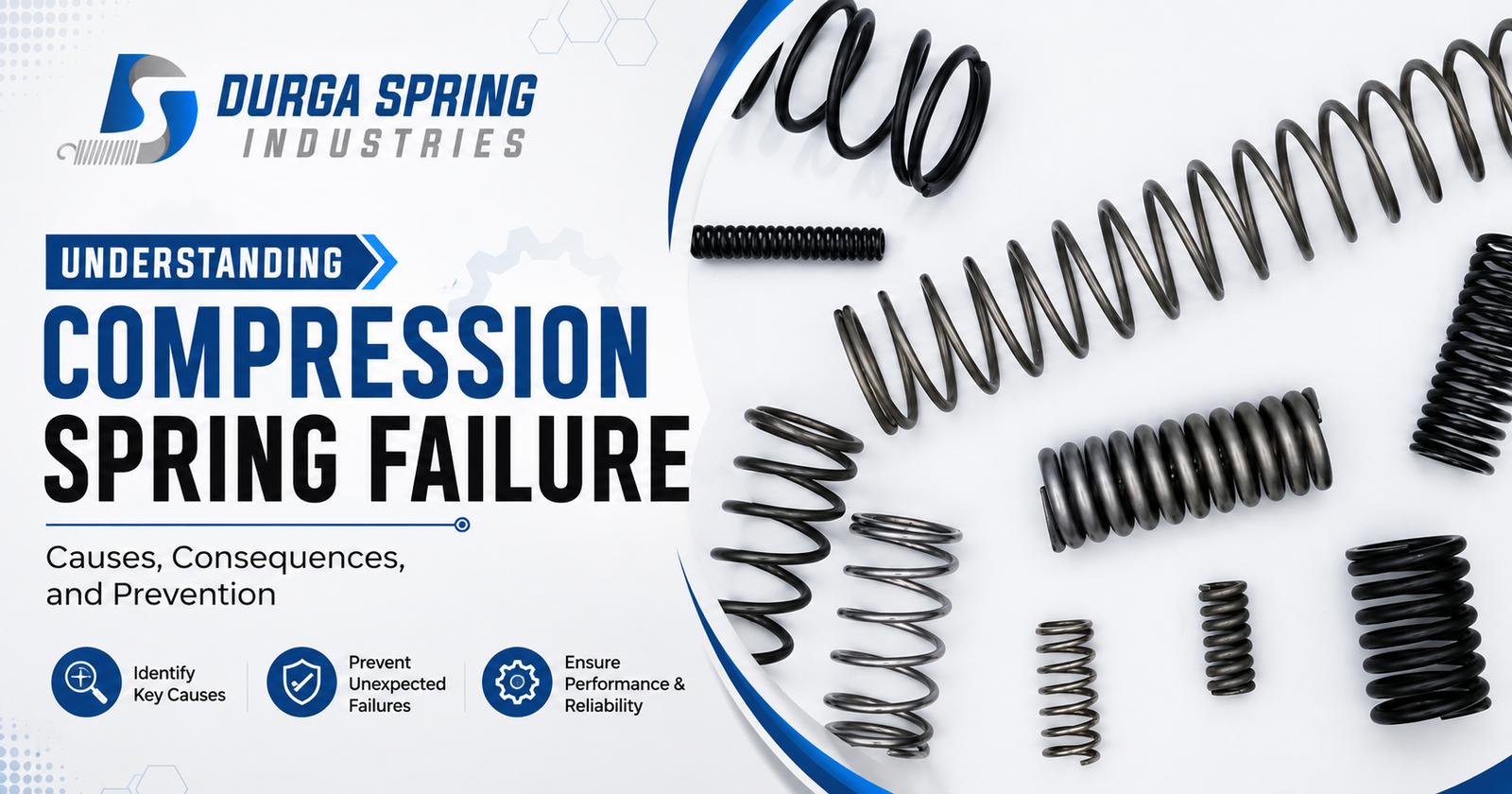
Compression Spring Failure
Compression springs are unsung heroes in countless mechanical systems, silently providing force and absorbing shock. Yet, like any hardworking component, they can fail. Understanding why and how this happens is crucial for maintaining operational efficiency and preventing costly disruptions. Durga Spring Industries, with its extensive experience in precision spring manufacturing, offers insights into the common pitfalls of compression springs and how to avoid them.
Common Culprits Behind Compression Spring Failure
The lifespan of a compression spring is influenced by numerous factors. Failure isn't usually a singular event but rather the result of one or a combination of these common issues:
- Fatigue: This is perhaps the most prevalent cause. Springs are designed to endure repeated cycles of compression and relaxation. Over time, these stress cycles can lead to microscopic cracks that grow, eventually causing the spring to break. Applications with constant motion or vibration are particularly prone to fatigue failure.
- Overloading and Excessive Stress: Applying a load that exceeds the spring's designed capacity can lead to permanent deformation, where the spring loses its ability to return to its original length, or even immediate breakage. This often occurs when systems are pushed beyond their intended operational limits.
- Corrosion: Exposure to moisture, humidity, chemicals, salt spray, or harsh industrial environments can significantly degrade spring material. Corrosion weakens the spring's structure, reduces its load-bearing capacity, and accelerates the onset of fatigue.
- Improper Material Selection: Using a spring made from a material not suited for its operating environment is a recipe for disaster. For instance, a standard steel spring in a highly corrosive atmosphere will degrade much faster than one made of stainless steel or a specially coated alloy.
- Manufacturing Defects and Tolerances: Inconsistent manufacturing processes can result in uneven stress distribution across the spring's coils. Poorly controlled tolerances or surface imperfections can create stress risers, making the spring more susceptible to cracking and premature failure.
- Incorrect Installation: Even a perfectly manufactured spring can fail if installed improperly. Misalignment, excessive side loading, or incorrect preload can induce uneven stresses, leading to premature wear and eventual failure.
- Overcompression: Repeatedly compressing a spring beyond its solid height (where coils touch) without proper design considerations or material treatments can cause excessive stress, deformation, and potentially lead to fractures.
The Ripple Effect: Consequences of Spring Failure
The failure of a seemingly small component like a compression spring can have a cascading effect on an entire system:
- Operational Downtime: A broken spring can halt production lines, disable machinery, and bring essential operations to a standstill, leading to significant revenue loss.
- Reduced Efficiency: Even a spring that has lost its load-carrying capacity without breaking can lead to malfunctioning equipment, reduced performance, and decreased overall productivity.
- Equipment Damage: A sudden spring failure can cause adjacent components to experience shock loads or improper movement, potentially leading to secondary damage to more expensive parts of the machinery.
- Increased Costs: Beyond lost production, there are costs associated with emergency repairs, replacement parts, and potentially safety incidents.
- Safety Hazards: In some applications, a spring failure could lead to dangerous situations for operators or nearby personnel.
Proactive Measures: Preventing Compression Spring Failure
Preventing failure is always more cost-effective than dealing with the aftermath. A combination of smart design, careful selection, and diligent maintenance is key:
- Design for the Application: Ensure the spring is designed with the correct dimensions, material, and load characteristics for its specific operating environment and duty cycle.
- Material Selection is Crucial: Choose materials that can withstand the expected operating temperatures, stresses, and environmental conditions (e.g., corrosion resistance, high-temperature alloys).
- Operate Within Design Limits: Never subject springs to loads or deflections beyond their specified capabilities. Understanding the spring's working range is vital.
- Quality Manufacturing: Partnering with reputable manufacturers who employ advanced technologies like CNC machines and automation ensures consistent quality, proper heat treatment, and accurate tolerances, significantly reducing the risk of defects.
- Proper Installation Techniques: Ensure springs are installed correctly, with proper alignment and no unintended side loading.
- Regular Inspection and Maintenance: Periodically inspect springs for signs of wear, corrosion, or deformation, especially in critical applications. Replace springs showing early signs of distress.
Durga Spring Industries: Your Partner in Spring Reliability
At Durga Spring Industries, we understand the critical role that reliable compression springs play in your operations. With over 15 years of experience in precision spring manufacturing, we leverage modern facilities equipped with advanced CNC machines and automation technology to produce high-quality compression springs that meet stringent requirements.
Our expertise spans a wide range of wire sizes, from 0.15mm to 10.00mm, enabling us to cater to diverse applications. We are committed to delivering springs manufactured to exact specifications, minimizing the risk of premature failure due to manufacturing inconsistencies. By choosing Durga Spring Industries, you are investing in components designed for performance and longevity, backed by a team dedicated to excellence in spring solutions. Our high-volume production capacity allows us to consistently meet demands, ensuring you have the reliable springs you need, when you need them.
Applications of Compression Springs
Compression springs are indispensable across a vast array of industries:
| Industry | Common Applications of Compression Springs |
|---|---|
| Automotive | Suspension systems, valve springs, clutch mechanisms, door latches |
| Aerospace | Actuation systems, landing gear components, control surfaces |
| Industrial Machinery | Vibration dampening, pressure relief valves, conveyor systems, machine tool components |
| Medical Devices | Surgical instruments, drug delivery systems, diagnostic equipment |
| Consumer Electronics | Switches, keyboards, retractable mechanisms, small appliances |
| Energy Sector | Valves, actuators, drilling equipment components |
Frequently Asked Questions (FAQ)
What is the most common cause of compression spring failure?
Fatigue, caused by repeated stress cycles over time, is the most common reason for compression spring failure in many applications.
How can I prevent my compression springs from failing due to corrosion?
Proper material selection is key. Use corrosion-resistant alloys (like stainless steel) or apply protective coatings suitable for the operating environment. Ensuring springs are kept clean and dry also helps.
Can manufacturing quality impact spring lifespan?
Absolutely. Inconsistent manufacturing can lead to uneven stress distribution and stress risers, reducing a spring's fatigue resistance and overall lifespan. High-quality manufacturing, as provided by experienced firms like Durga Spring Industries, is essential.
What happens if a compression spring is overloaded?
Overloading a compression spring can cause it to permanently deform (lose its ability to return to its original length) or break outright, leading to immediate system failure.
Ensure Your Springs Withstand the Test of Time
Don't let compression spring failure disrupt your operations. Partner with Durga Spring Industries for reliable, high-quality compression springs manufactured with precision and expertise. Our commitment to using advanced technology and maintaining stringent quality control means you receive springs designed for durability and performance.
Contact us today to discuss your specific requirements and discover how our manufacturing capabilities can support your success.
Get a Quote