
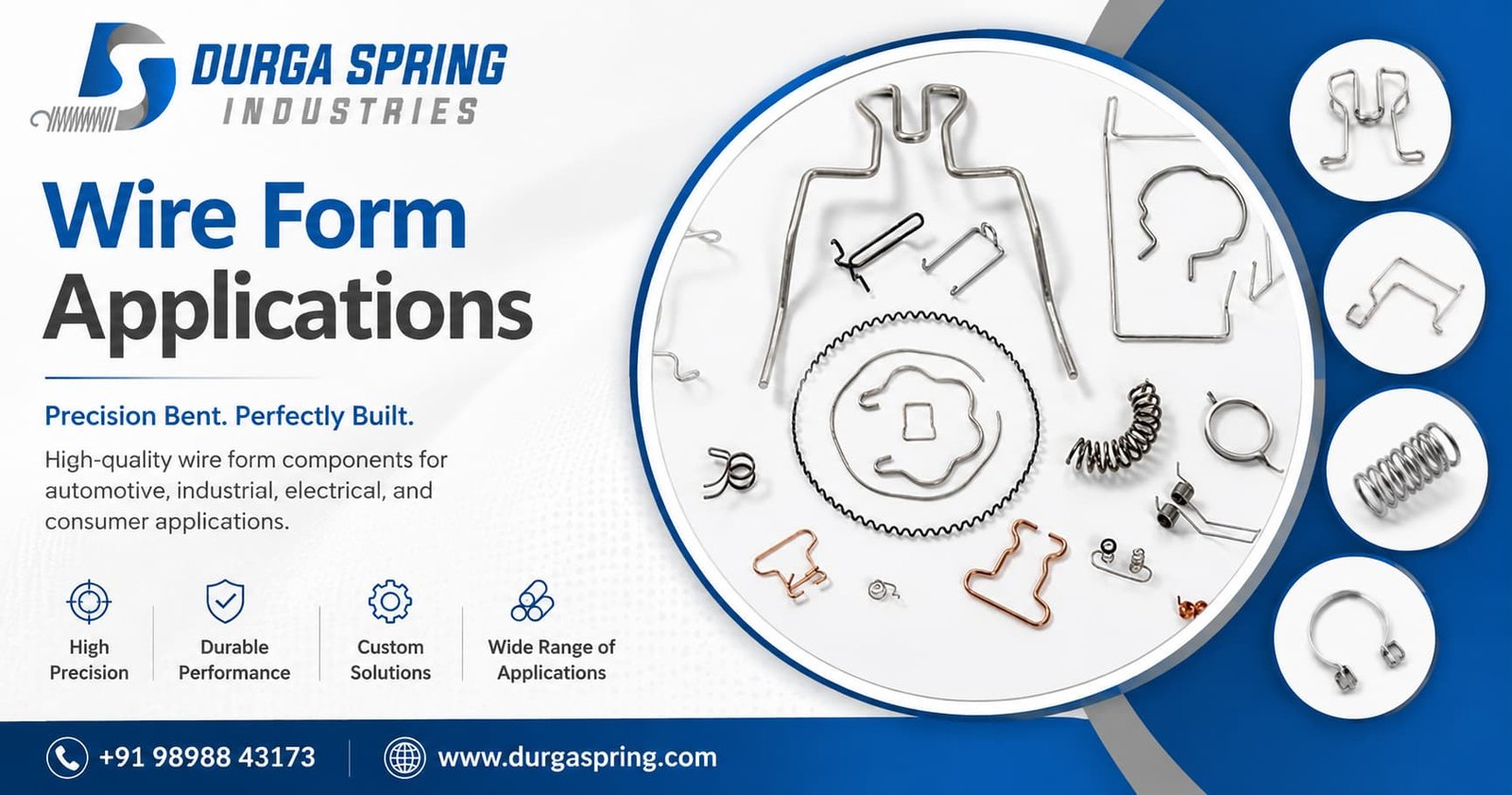
Wire Form Applications
Wire forms are the unsung heroes of modern manufacturing, silently enabling functionality and structural integrity in countless products. These custom-made components, shaped through precise bending and twisting of wire, are integral to a vast array of industries. Their adaptability, driven by material science and advanced manufacturing techniques, makes them indispensable for solving complex engineering challenges. Whether providing crucial support, facilitating movement, or acting as a fastening element, the applications of wire forms are as diverse as the industries they serve.
Understanding Wire Forms
At its core, a wire form is a component created by shaping a single piece of wire into a specific, often intricate, three-dimensional design. This shaping process can involve bending, coiling, twisting, or cutting to achieve the desired geometry. Unlike simple wires, wire forms are engineered to fulfill a particular function, ranging from holding components together to providing spring-like action or structural support. The versatility arises from the ability to manipulate wire into complex shapes that meet precise specifications, making them a highly sought-after manufacturing solution.
The process of creating wire forms typically relies on advanced machinery, such as CNC wire bending machines. These machines offer high precision and repeatability, allowing for the mass production of complex designs with tight tolerances. The raw material for wire forms can vary widely, including materials like stainless steel, carbon steel, aluminum, and specialized alloys, chosen based on the application's demands for strength, corrosion resistance, flexibility, and durability.
Diverse Wire Form Applications Across Industries
The utility of wire forms spans nearly every manufacturing sector, underscoring their importance in product design and functionality. Their customizability ensures they can be tailored to meet the unique demands of each application.
Automotive Industry
In automotive manufacturing, wire forms are used for everything from seat frame components and suspension system parts to clips for interior trim and fastening elements. They contribute to vehicle safety, comfort, and structural integrity.
Electronics and Electrical Components
Wire forms serve as essential electrical connectors, contact points, and structural supports within electronic devices. Their precise shapes ensure reliable connections and efficient space utilization in compact designs.
Aerospace
The aerospace industry relies on wire forms for lightweight yet strong components, such as brackets, fasteners, and specialized structural elements that must meet stringent performance and reliability standards.
Medical Devices
Precision and biocompatibility are key in medical applications. Wire forms are used in surgical instruments, medical device components, diagnostic equipment, and even parts for braces and orthopedic devices.
Consumer Goods
From kitchen gadgets and appliance parts to hardware for furniture and toys, wire forms provide functional and aesthetic solutions in everyday consumer products. Think of custom hooks, handles, or internal support structures.
Industrial Machinery
Heavy-duty applications in industrial machinery include brackets, frames, levers, and custom-shaped components that require high strength and durability to withstand demanding operational conditions.
Key Benefits of Using Wire Forms
The widespread adoption of wire forms is driven by a compelling set of advantages they offer to manufacturers and product designers:
- Customization: Wire forms can be precisely engineered to meet unique design specifications, enabling tailored solutions for specific functional requirements.
- Versatility: They can be manufactured from a wide range of materials and shaped into virtually any design, adapting to diverse application needs.
- Cost-Effectiveness: For many applications, wire forms offer a more economical solution compared to fabricated metal parts or complex assemblies, especially in high-volume production.
- Precision and Repeatability: Modern manufacturing techniques, particularly CNC machining, ensure high accuracy and consistent quality across large production runs.
- Strength and Durability: When made from appropriate materials, wire forms can offer excellent strength-to-weight ratios and resistance to wear, fatigue, and environmental factors.
- Functionality: They can be designed to perform specific mechanical functions, such as providing spring tension, acting as a latch, or offering structural support.
Buyer's Guide: Selecting the Right Wire Form
Choosing the appropriate wire form is crucial for ensuring optimal performance, durability, and cost-effectiveness. Consider these factors when making your selection:
1. Define Application Requirements
Clearly outline the function the wire form needs to perform. Will it bear weight, provide tension, act as a connector, or offer structural support? Understanding the load, movement, and environment is paramount.
2. Material Selection
The choice of material significantly impacts the wire form's properties. Consider:
- Strength and Load Capacity: High-carbon steel or chrome silicon for high-stress applications.
- Corrosion Resistance: Stainless steel or aluminum for humid or corrosive environments.
- Flexibility: Music wire or oil-tempered steel might be suitable for applications requiring elasticity.
- Weight: Aluminum or certain alloys for weight-sensitive applications like aerospace.
3. Design and Tolerances
Work with your manufacturer to develop a design that meets precise geometric specifications. Discuss the required tolerances – especially critical for high-performance industries like electronics or medical devices.
4. Production Volume and Cost
Consider the quantity needed. Complex designs or high volumes often benefit from CNC machining for efficiency and cost-effectiveness. Discuss production lead times with your supplier.
5. Quality Control
Inquire about the manufacturer's quality control processes. Reputable manufacturers will have systems in place to ensure that each wire form meets the specified dimensions and material properties.
Buyer Insight:
When specifying a wire form, providing a detailed 3D model or a clear, dimensioned drawing is essential. This level of detail helps manufacturers ensure accuracy and prevents costly misunderstandings, especially for complex geometries or critical applications.
Durga Spring Industries: Your Partner for Precision Wire Forms
Located in Ahmedabad, Gujarat, India, Durga Spring Industries brings over 15 years of experience in manufacturing high-quality springs and precision wire forms. Leveraging advanced CNC machines and automation technology, the company is equipped to handle a wide range of wire sizes, from 0.15mm to 10.00mm, ensuring the production of intricate and robust components.
Durga Spring Industries offers a comprehensive suite of spring and wire products, including compression springs, tension springs, torsion springs, die springs, and custom wire forms. Their commitment to precision manufacturing ensures that each component meets stringent industry standards and customer specifications. With a significant monthly production capacity, they are well-positioned to serve diverse industrial needs, providing reliable and expertly crafted wire form solutions.
Frequently Asked Questions about Wire Forms
What are the most common materials used for wire forms?
Common materials include various grades of steel (low carbon, high carbon, spring steel, stainless steel), chrome silicon, oil-tempered steel, and aluminum, chosen based on the required strength, flexibility, and environmental resistance.
How do I ensure the wire form I order will fit my application?
Provide clear technical drawings, 3D models, or detailed specifications including dimensions, tolerances, material requirements, and functional purpose to your manufacturer. Clear communication is key.
Can wire forms be used in high-temperature environments?
Certain materials, like specific grades of stainless steel or high-temperature alloys, can be used for wire forms in elevated temperature applications. The suitability depends heavily on the chosen material and the exact operating temperature.
What is the advantage of using CNC machines for wire form production?
CNC machines offer high precision, excellent repeatability, and the ability to create complex shapes efficiently. This leads to consistent quality, tighter tolerances, and cost-effectiveness for both small and large production runs.
Are wire forms a good option for small production runs?
While CNC machining excels at high volumes, advancements in technology and setup efficiencies can make wire forms cost-effective even for smaller runs, depending on the complexity of the design and the manufacturer's capabilities.
Get Your Custom Wire Form Solution
Ready to leverage the power of precision-engineered wire forms for your next project? Durga Spring Industries, based in Ahmedabad, Gujarat, specializes in creating custom wire forms tailored to your exact specifications. With extensive experience and advanced manufacturing capabilities, we can help you find the perfect solution. Contact us today to discuss your requirements and receive a quote.
Request a Quote