
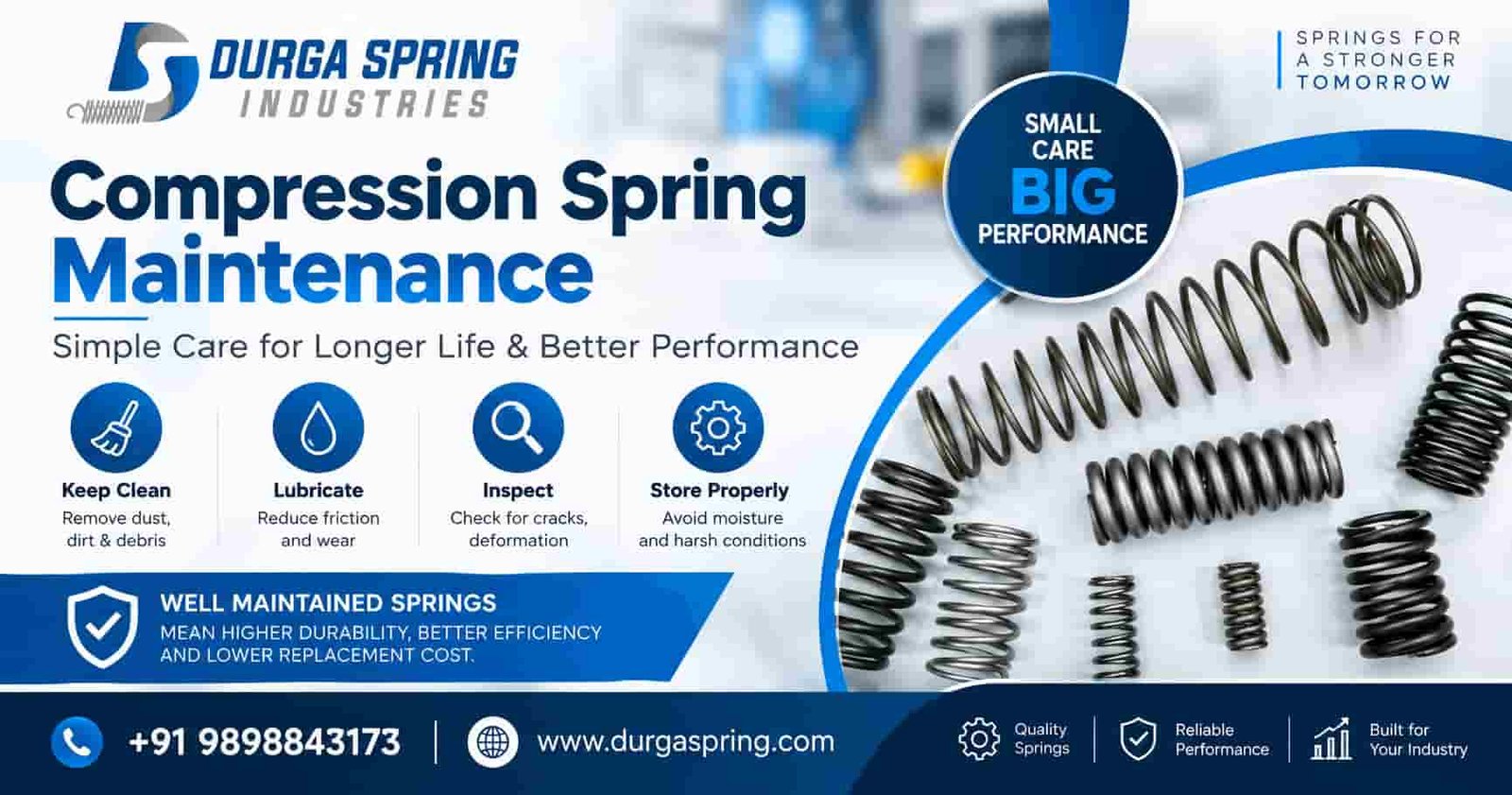
Compression Spring Maintenance
Compression springs are vital components across numerous industries, providing essential functionality in everything from automotive systems to delicate surgical equipment. Their ability to store and release energy, absorb shock, and maintain stability makes them indispensable. However, like any mechanical component, compression springs require proper care and maintenance to ensure they perform optimally and last as long as possible. Neglecting maintenance can lead to premature failure, reduced efficiency, and costly downtime. This guide will delve into the crucial aspects of compression spring maintenance, offering practical advice to help you maximize their lifespan and performance.
Understanding Compression Springs
Compression springs are helical mechanical devices designed to resist compressive forces. When a load is applied along their axis, they shorten, storing potential energy. Upon removal of the load, they return to their original length, releasing this energy. These springs are typically manufactured from materials like spring steel, stainless steel, or specialized alloys, chosen for their elasticity and strength. Their design, including wire diameter, coil pitch, and outer diameter, can be customized to meet specific load requirements and space constraints.
The applications for compression springs are vast, including shock absorption in automotive suspensions, providing tension in machinery, actuating mechanisms in electronics, and ensuring precise operation in surgical instruments. Their ability to function reliably in limited spaces and under significant stress makes them a go-to solution for engineers.
The Importance of Compression Spring Maintenance
Proper maintenance of compression springs is not just about upkeep; it's a strategic necessity for operational efficiency and economic viability. Regular attention can significantly extend a spring's service life, preventing unexpected failures and the associated costs.
Key reasons why compression spring maintenance is crucial include:
- Ensuring Optimal Performance: Over time, springs can lose their effectiveness due to fatigue, deformation, or corrosion. Maintenance helps restore and maintain their intended load-bearing capacity and response characteristics.
- Preventing Catastrophic Failure: A worn or damaged spring can fail suddenly, potentially causing damage to surrounding components or leading to system shutdowns. Proactive maintenance identifies and addresses issues before they escalate.
- Extending Service Life: By implementing best practices in handling, lubrication, and protection, you can significantly prolong the operational life of your compression springs, reducing the frequency of replacements.
- Cost Savings: Replacing failed components and dealing with system downtime is expensive. Regular maintenance is a cost-effective strategy that minimizes these expenditures.
- Maintaining Safety: In critical applications like automotive or medical devices, the reliable performance of compression springs is paramount for safety. Well-maintained springs contribute to overall system integrity.
Key Compression Spring Maintenance Practices
Effective compression spring maintenance involves a combination of preventative measures and regular checks. Here are the essential practices to adopt:
Selection and Design
The foundation of a long-lasting spring lies in its initial selection and design. Choosing the correct material, spring rate, and dimensions for the intended application is paramount. Over-engineering slightly can provide a buffer against unexpected loads or environmental factors.
Avoiding Overloading
One of the most common causes of spring failure is exceeding its designed load capacity. Compression springs should never be forced beyond their solid height (where coils touch) or subjected to forces greater than their maximum rated load. This can cause permanent deformation and significantly reduce performance.
Corrosion Protection
Corrosion is a major enemy of metal springs. Protecting against it can involve selecting corrosion-resistant materials like stainless steel, applying protective coatings (e.g., plating, powder coating), or using appropriate lubricants. Environmental conditions (humidity, chemical exposure) should guide these choices.
Proper Lubrication
For springs operating in dynamic applications, proper lubrication is essential. It reduces friction between coils, minimizes wear, prevents corrosion, and can help dissipate heat. The type of lubricant should be compatible with the spring material and operating environment.
Avoiding Excessive Cycling
While compression springs are designed for durability, continuous, high-frequency cycling under heavy loads can lead to material fatigue over time. Understanding the expected duty cycle and ensuring the spring is rated accordingly is crucial.
Careful Handling and Storage
During installation, maintenance, or storage, handle springs with care to avoid accidental damage, bending, or scratching. Store them in a dry, temperature-controlled environment, ideally in protective packaging, to prevent corrosion and deformation.
Regular Inspection and Signs of Wear
Consistent inspection is key to identifying potential issues before they lead to failure. Regularly examine your compression springs for the following signs of wear and damage:
- Diminished Load Performance: If the spring doesn't exert the expected force or feels
