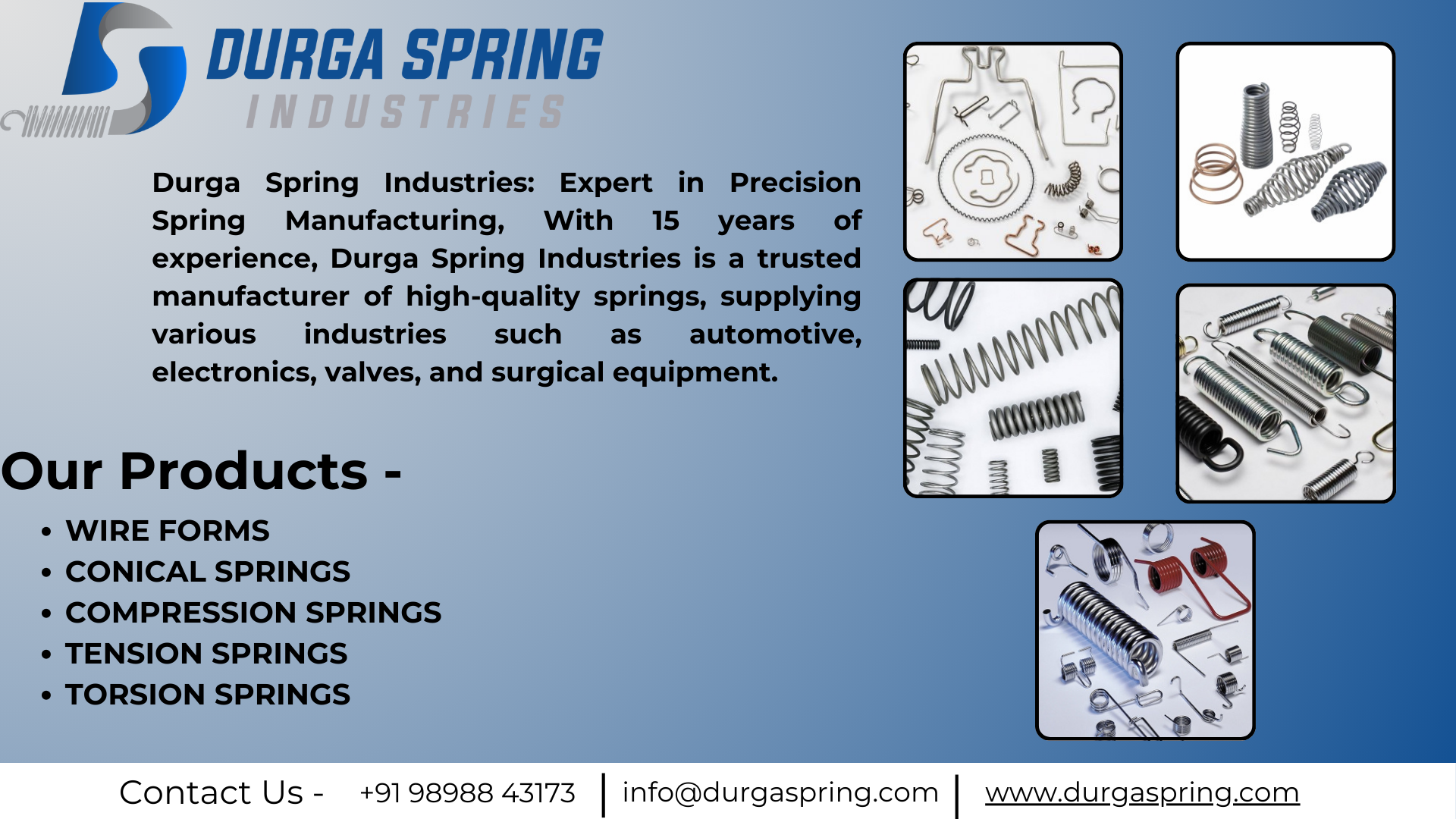
Heavy Duty Die Spring Supplier in India | Durga Spring
Heavy Duty Die Spring Supplier in India
Introduction
Heavy duty die springs are designed for high-load, repeated compression in demanding tooling environments. As a heavy duty die spring supplier in India, Durga Spring supports press shops, mould and die manufacturers, tool rooms, and industrial maintenance teams that need consistent spring force, stable working life, and dependable supply. Our die springs are engineered for tough duty cycles where standard compression springs may fail, making them a preferred choice for punching, stamping, forming, and injection mould tooling across multiple industries.
What Makes a Die Spring Heavy Duty and Reliable
Die springs work under extreme stress, high repetition, and limited installation space. Performance depends on spring design and controlled manufacturing processes. Key factors that define heavy duty die springs include:
High load capacity with stable compression behavior through optimized coil geometry.
Consistent spring rate and free length control for repeatable tool setup and stroke control.
Durable surface finish and controlled processing to reduce fatigue and early breakage.
For press tools and die sets, selecting the right die spring grade, dimensions, and working deflection helps reduce downtime and improve production stability.
Applications & Benefits — Heavy Load Tooling Support
Common Applications
Press tool assemblies for stamping, punching, blanking, and bending operations.
Die sets and stripper plate systems requiring controlled return force.
Mould components and ejector-related mechanisms in high-cycle tooling.
Fixture clamping and industrial assemblies where compact high-force springs are required.
Maintenance replacement for worn or cracked springs in production tooling.
Operational Benefits
Stable force output across repeated cycles for consistent press performance.
Reduced tool misalignment risks through predictable compression characteristics.
Improved productivity by minimizing spring-related stoppages and failures.
Better process control for stroke, stripping action, and return load.
Supplier support for selection guidance and repeat supply to standard sizes.
Selection Guidance for Heavy Duty Die Springs
Match outer diameter and free length to the die pocket, ensuring proper seating and alignment.
Select working deflection within recommended limits to improve fatigue life and reduce cracking.
Use the correct spring grade for load requirements and cycle intensity in the press tool.
Confirm end condition and surface finish requirements for smoother operation and reduced wear.
Keep standard replacement sizes in inventory to minimize downtime during tool maintenance.
Supplier Support for Tool Rooms and Press Shops
As a heavy duty die spring supplier in India, Durga Spring supports procurement and tool maintenance teams with repeatable quality and reliable dispatch timelines. Whether you need consistent replacements for press tooling or customized sizes for new die designs, our team helps you align dimensions, load expectations, and application conditions so your tooling performs reliably across production cycles.
Maintenance & Safety Tips — Improve Spring Life
ChecklistDurga Spring
Installation & Alignment
Ensure spring seats are clean, flat, and aligned to prevent side loading that can shorten spring life.
Use the correct guide rods or sleeves when required to maintain straight compression during cycles.
Confirm the working deflection is within recommended range to reduce fatigue and avoid coil bind issues.
Safety & Inspection
Inspect springs at planned intervals for cracks, deformation, or surface damage before failures occur.
Replace springs in matched sets when tool balance is critical for consistent stripping and return action.
Never heat or modify a die spring in the field, as it can change properties and reduce reliability.
FAQs about Heavy Duty Die Springs
Q1
Where are heavy duty die springs commonly used?
They are widely used in press tools, stamping dies, bending dies, stripper plates, and tooling assemblies where repeated high-load compression is required.
Q2
How do I choose the correct size for my die set?
Measure the spring pocket diameter and depth, then match outer diameter, free length, and working deflection to the available space and load needs.
Q3
What causes early die spring failure?
Common causes include side loading, over-compression beyond recommended limits, coil bind, misalignment, contamination, and inadequate inspection intervals.
Q4
Can you support repeat orders for standard die spring sizes?
Yes. We support repeat supply programs for commonly used sizes so tool rooms can maintain consistent replacements and reduce downtime.
Q5
How can I send requirements for a quotation or technical guidance?
Share spring size details (OD, ID, free length), expected working deflection, application type, and quantity via WhatsApp or email for quick assistance.