
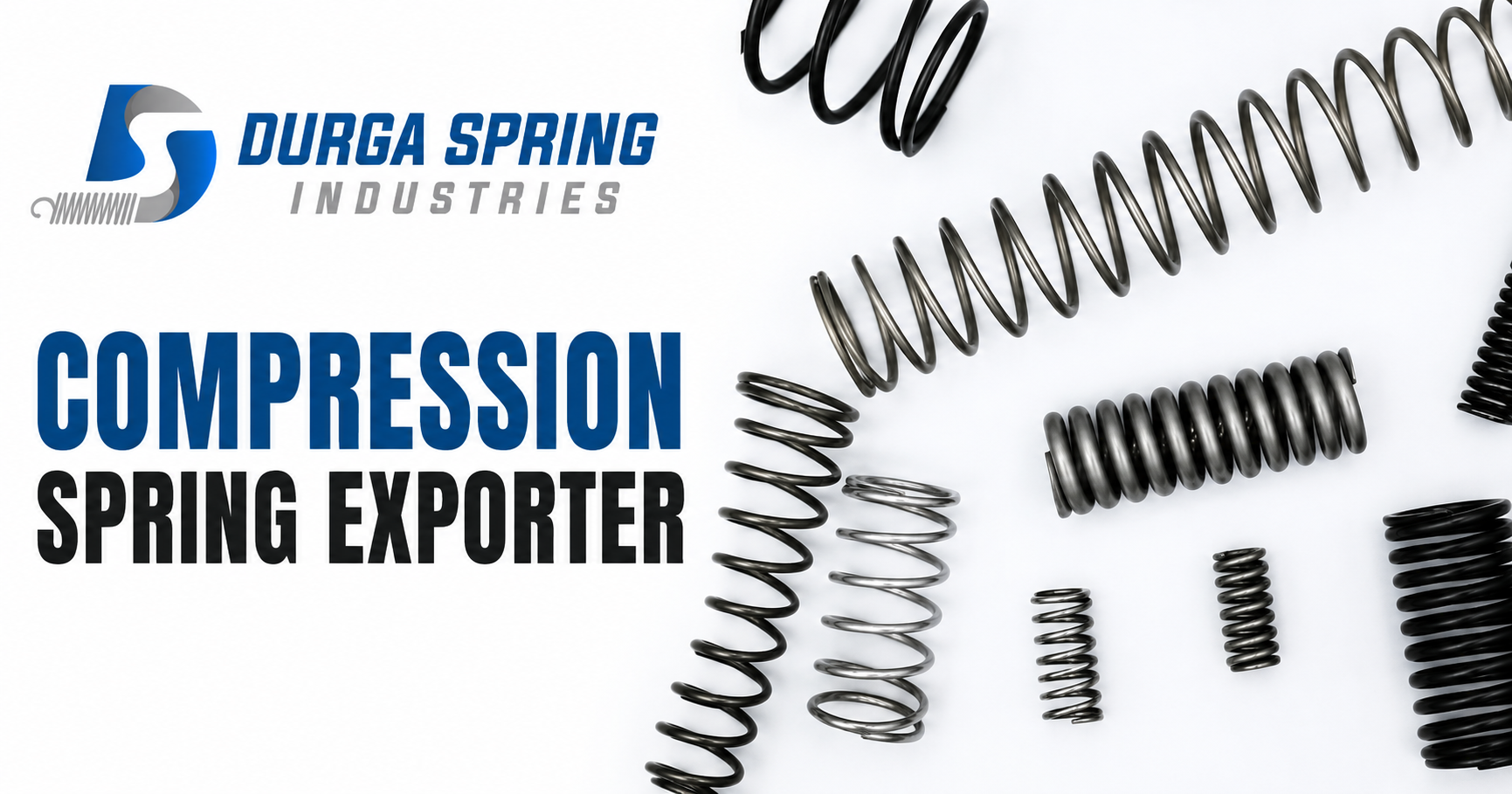
Compression Spring Exporter
Expert compression spring exporter in Ahmedabad. Durga Spring Industries offers custom precision springs for diverse industrial needs. Get reliable solutions.
Why This Matters in Ahmedabad
Ahmedabad, and Gujarat as a whole, is a powerhouse of industrial activity, spanning sectors from automotive and textiles to pharmaceuticals and engineering. This dynamic environment fuels a continuous need for specialized components like compression springs. Industries here rely on local suppliers who understand the regional manufacturing landscape and can deliver components that meet stringent quality and performance standards. A local exporter can offer faster turnaround times and a deeper understanding of the specific challenges and opportunities within the Gujarat industrial ecosystem.
What is a Compression Spring — Overview
A compression spring is a mechanical device designed to resist a compressive force. When compressed, it stores energy and exerts a force in the opposite direction, pushing back against the applied load. These springs are typically helical, made from wire wound into a coil. They are characterized by their ability to return to their original length after the compressive force is removed. The design, material, and manufacturing process are critical to their performance, ensuring they function reliably under specific load conditions and environmental factors.
Key Features and Technical Specifications
When evaluating compression springs, several technical aspects are crucial for ensuring they meet application requirements:
- Wire Diameter: The thickness of the wire used to form the spring coil, directly impacting its strength and load capacity.
- Outer Diameter: The overall width of the spring coil, which must fit within the available space in the application.
- Free Length: The length of the spring when no load is applied, determining its uncompressed state.
- Solid Height: The minimum length the spring can be compressed to, where coils touch each other.
- Spring Rate (or Stiffness): The force required to compress the spring by a unit of distance, indicating how much it resists compression.
- Material: The type of metal alloy used (e.g., spring steel, stainless steel), chosen for its tensile strength, corrosion resistance, and fatigue life.
- End Type: The configuration of the spring ends (e.g., ground, squared, closed, open), affecting stability and load distribution.
- Torsion/Deflection: The amount of twist or compression the spring can withstand before permanent deformation or failure.
Industrial Applications and Use Cases
Compression springs are ubiquitous across a wide array of industries due to their versatile functionality:
- Automotive: Used in suspension systems, clutches, brake mechanisms, and engine components for shock absorption and actuation.
- Industrial Machinery: Incorporated into valves, pumps, switches, and actuators for pressure regulation and operational control.
- Electronics: Found in connectors, switches, and relays to ensure proper contact and mechanical function.
- Medical Devices: Utilized in surgical instruments, diagnostic equipment, and drug delivery systems where precision and biocompatibility are key.
- Aerospace: Employed in critical components requiring high reliability and performance under extreme conditions.
- Consumer Goods: Present in furniture, appliances, and toys for various mechanical functions and ergonomic design.
- Defense: Integrated into weaponry, vehicles, and equipment demanding robust and dependable performance.
- Oil & Gas: Used in downhole tools and equipment for pressure control and sealing applications.
How to Choose the Right Compression Spring
Selecting the appropriate compression spring involves a systematic approach to ensure optimal performance and longevity:
- Application Requirements: Clearly define the load, deflection, operating environment (temperature, corrosive elements), and space constraints.
- Material Selection: Choose a material that offers the necessary strength, corrosion resistance, and fatigue life for the intended application.
- Dimensional Accuracy: Ensure the spring's outer diameter, wire diameter, and length are precisely manufactured to fit the assembly.
- Spring Rate Precision: Verify that the spring rate is within the acceptable tolerance for the application's force requirements.
- End Type Compatibility: Select an end type that provides stability and proper load transfer within the mechanism.
- Compliance and Certifications: Confirm that the spring meets relevant industry standards and any required certifications for safety and quality.
- Supplier Reputation and Experience: Partner with a manufacturer with a proven track record in producing high-quality springs and a strong understanding of your industry.
- Customization Capabilities: Assess the supplier's ability to produce custom designs if standard options do not meet specific needs.
Quality Standards and Compliance
For any industrial component, adherence to recognized quality standards is non-negotiable. Reputable compression spring manufacturers operate under strict quality control protocols. This often includes compliance with international standards such as ISO 9001 for quality management systems. Specific materials may also need to meet standards like ASTM or EN specifications. For applications in sensitive industries like automotive or medical, adherence to sector-specific standards (e.g., IATF 16949 for automotive) is crucial. Buyers should always inquire about the certifications held by their chosen supplier and request documentation to verify compliance with relevant national and international quality benchmarks.
Why Durga Spring Industries' Experience and Capability Matters
Durga Spring Industries brings over 15 years of dedicated experience in precision spring manufacturing to the market. Our facility in Ahmedabad is equipped with advanced CNC machinery, enabling us to handle a wide range of wire sizes from 0.15mm to 10.00mm with exceptional accuracy. This technological capability, combined with a highly educated and skilled team, allows us to produce over 2.1 million springs monthly. Our manufacturing process is meticulously controlled, ensuring every spring meets exact specifications for load, dimensions, and material integrity. We pride ourselves on our ability to deliver consistent quality and reliable performance, making us a trusted partner for businesses seeking dependable compression spring solutions.
Installation, Maintenance, and Care Tips
Proper installation and care are vital for maximizing the lifespan and performance of compression springs. When installing, ensure the spring is seated correctly on its intended surfaces, and that the load is applied axially to prevent buckling or uneven stress. Avoid over-compressing the spring beyond its solid height, as this can cause permanent deformation and reduce its effectiveness. Regular inspection for signs of wear, corrosion, or fatigue is recommended, especially in harsh operating environments. If a spring shows any signs of damage, it should be replaced immediately to prevent system failure. Proper lubrication, if recommended for the specific application and material, can also help reduce friction and wear.
Frequently Asked Questions
The lifespan of a compression spring is highly dependent on the application, including the load cycles, operating environment, and material quality. Springs used in low-stress, controlled environments can last for millions of cycles, while those in high-stress or corrosive conditions may have a significantly shorter service life. Proper design and material selection are key to achieving optimal longevity.
Yes, compression springs can be manufactured from a wide variety of metals, including various grades of spring steel, stainless steel, phosphor bronze, beryllium copper, and exotic alloys. The choice of material is determined by the required properties such as tensile strength, corrosion resistance, temperature tolerance, and electrical conductivity.
A ground end spring has its ends ground flat and perpendicular to the spring's axis, providing a stable base for load application. A squared (or closed) end spring has its last coil bent inwards to close the end, offering similar stability. The choice depends on the specific mounting requirements and desired load distribution in the application.
Temperature can significantly impact a compression spring's performance. High temperatures can reduce the material's tensile strength and spring rate, potentially leading to premature failure or loss of load capacity. Conversely, extremely low temperatures can make some materials brittle. The material selection must account for the expected operating temperature range.
In valve systems, compression springs are crucial for returning valve components to their default position, sealing openings, or maintaining a specific pressure. They ensure that valves operate correctly, whether opening or closing, by providing the necessary counter-force to the fluid pressure or actuation mechanism.
To ensure high quality, look for manufacturers with established quality management systems (like ISO 9001 certification), inquire about their material sourcing and testing procedures, and request samples for testing. Understanding their manufacturing processes, such as the use of CNC machinery and in-process inspections, also provides confidence in their quality control.
Conclusion
For industries in Ahmedabad and beyond, securing a reliable source for high-quality compression springs is essential for operational success. Partnering with an experienced exporter like Durga Spring Industries means gaining access to precision-engineered components backed by extensive manufacturing expertise and a commitment to quality. By understanding the critical specifications, applications, and the importance of choosing a capable supplier, businesses can ensure they receive springs that meet their exact needs, contributing to the overall reliability and performance of their products and systems.
Get In Touch
Durga Spring Industries
