
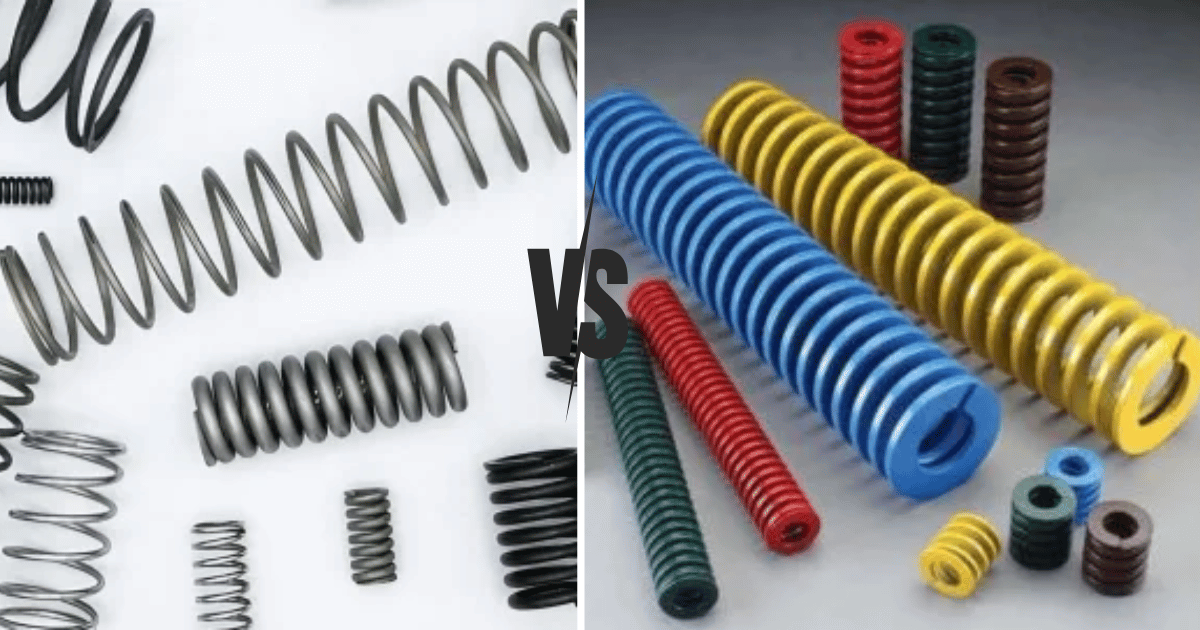
Die Spring vs Compression Spring
In the realm of mechanical engineering, springs are ubiquitous components, providing essential functions like energy storage, shock absorption, and force exertion. Among the vast array of spring types, die springs and general compression springs are often discussed together, yet they possess distinct characteristics and are designed for vastly different operational demands. Understanding the nuances between a die spring and a compression spring is crucial for engineers and manufacturers to ensure optimal performance, longevity, and safety in their machinery and equipment. This guide delves into the core differences, applications, and selection criteria for both types of springs.
Understanding the Basics: Compression Springs
A compression spring is perhaps the most common type of spring encountered. It is essentially a helical coil made from a single, uniform metal strand, designed to resist a compressive force. When an external load is applied, the spring is compressed, storing potential energy. Upon release of the load, the spring returns to its original free length, exerting a force that opposes the compression. These springs are engineered with various materials, wire shapes (round, square, rectangular), and end configurations to suit a broad spectrum of applications, from simple household items to complex industrial machinery.
General compression springs are designed for a wide range of force requirements and operational environments. Their performance is largely determined by material properties, wire diameter, coil diameter, number of active coils, and the spring's overall length and pitch. They are versatile and can be found in everything from pens and door hinges to automotive suspensions and industrial valves.
What is a Die Spring?
A die spring, while technically a type of compression spring, is a specialized, heavy-duty variant engineered to withstand exceptionally high loads and demanding operational conditions. These springs are specifically designed for use in die sets, stamping, and other high-stress applications where significant force, durability, and consistent performance are paramount. Unlike standard compression springs, die springs are typically manufactured from high-tensile strength rectangular wire, which allows them to store and deliver considerably more energy and withstand much greater stress cycles.
Key characteristics of die springs include their robust construction, often using oil-hardened alloys that can maintain their properties at elevated temperatures (up to 230°C). They are built for extreme durability and longevity in high-pressure environments. Die springs are also often color-coded to indicate their respective force capacities, providing a visual cue for selection and application.
Die Spring vs Compression Spring: Key Differentiating Factors
The primary distinction between die springs and general compression springs lies in their design intent, materials, and performance capabilities:
- Material and Wire Shape: General compression springs commonly use round wire. Die springs predominantly use rectangular or square wire, which offers a larger surface area for load-bearing and increased rigidity. The materials for die springs are also selected for higher tensile strength and heat resistance.
- Load Capacity and Energy Storage: Die springs are designed for significantly higher loads and can store more energy than standard compression springs of similar dimensions. This is due to their stronger materials and often tighter coil winding for a given length.
- Operating Environment: While compression springs can function in a variety of conditions, die springs are specifically engineered for high-stress, high-temperature, and continuous-duty cycles common in tooling and die applications.
- Durability and Lifespan: The robust construction and superior materials of die springs contribute to a much longer lifespan and greater resistance to fatigue and premature failure under heavy, repetitive loads.
- Cost: Due to their specialized materials and manufacturing processes, die springs are generally more expensive than standard compression springs.
- Color Coding: Many die springs come in different colors (e.g., yellow, red, blue, green) to denote their respective load rates or force capacities, simplifying selection and inventory management for users. Standard compression springs typically do not have this feature.
Applications and Use Cases
The choice between a die spring and a general compression spring is dictated by the application's specific demands.
Die Spring Applications:
- Die Sets and Tooling: Their primary application is in press brake dies, stamping dies, and molding dies, where they provide the necessary force to operate complex mechanisms, eject parts, or maintain alignment under extreme pressure.
- Heavy Machinery: Used in demanding industrial equipment such as farm machinery, construction equipment, and manufacturing automation systems requiring high-force components.
- Automotive Mechanisms: Found in specialized automotive components and assembly line tooling where high stress and reliability are critical.
- Aerospace Components: Employed in certain aircraft mechanisms that require compact, high-force spring solutions.
- High-Temperature Environments: Their ability to withstand elevated temperatures makes them suitable for applications near heat sources.
Compression Spring Applications:
- Consumer Products: From retractable pens to appliances and toys.
- Automotive: Widely used in suspensions, valves, clutches, and various engine components.
- Electronics: In switches, connectors, and small mechanical assemblies.
- Medical Devices: In drug delivery systems, diagnostic equipment, and surgical tools.
- General Industrial Equipment: Found in conveyors, pumps, valves, and control mechanisms where moderate forces are required.
Key Benefits of Using the Right Spring
Selecting the correct type of spring is not merely about fitting a component; it directly impacts the functionality, efficiency, and lifespan of the entire system.
Enhanced Reliability
Using a die spring in a high-load application ensures it is designed for the task, reducing the risk of failure and downtime.
Increased Lifespan
Specialized materials and robust designs mean die springs can endure significantly more stress cycles than standard compression springs.
Optimized Performance
The precise force and energy return characteristics of the appropriate spring type ensure machinery operates as intended.
Temperature Resistance
Die springs' ability to perform in higher temperatures offers an advantage in applications near heat-generating processes.
Buyer's Guide: Selecting Your Spring Solution
When sourcing springs, especially for critical industrial applications, a methodical approach ensures you obtain the component that best meets your needs. Durga Spring Industries, with its extensive experience in manufacturing a wide range of springs including die and compression springs, emphasizes understanding these selection criteria.
Essential Selection Criteria:
- Load Requirements: Determine the exact force the spring must exert or resist at its compressed or extended state.
- Stroke/Travel: Define the maximum distance the spring needs to compress or extend.
- Operating Environment: Consider temperature, exposure to chemicals, moisture, and any potential for impact or vibration.
- Space Constraints: The available space for the spring dictates its outer diameter, free length, and compressed length.
- Duty Cycle: How frequently will the spring be actuated? High-frequency applications demand more durable springs.
- Material Compatibility: Ensure the spring material is suitable for the operating conditions, especially regarding corrosion and temperature.
- Spring Type: Based on the above, decide if a general compression spring, a specialized die spring, or another type is most appropriate.
Buyer Insight:
Do not overlook the importance of spring material and wire form. For high-stress applications, the rectangular wire and specialized alloys used in die springs provide a critical advantage over standard round-wire compression springs.
Questions to Ask Before Purchasing:
- What is the spring's rated load at its maximum compression?
- What is the maximum safe operating deflection?
- Is the spring material suitable for the operational temperature range?
- What is the expected lifespan or fatigue life under the intended operating conditions?
- Are there color-coding standards used that indicate force or material type?
Requesting the Right Solution:
When engaging with a spring manufacturer like Durga Spring Industries, be prepared to provide detailed specifications. This includes desired force at specific lengths, free length, outer diameter, wire diameter (if known), end finishes, and all environmental factors. Accurate information leads to a precise spring solution.
Durga Spring Industries: Your Partner for Precision Springs
With 15 years of experience in manufacturing precision springs and components, Durga Spring Industries is well-equipped to address diverse industrial needs, from standard compression springs to high-performance die springs. Operating from Ahmedabad, Gujarat, India, the company leverages advanced CNC machines and automation technology to produce over 2.1 million springs monthly, catering to industries such as automotive, electronics, and valve manufacturing.
Durga Spring Industries’ capabilities include handling wire sizes from 0.15mm to 10.00mm, enabling the production of a broad spectrum of spring types. Whether you require robust die springs for heavy-duty tooling or reliable compression springs for intricate mechanisms, their expertise ensures quality and precision. Their commitment to utilizing advanced manufacturing techniques allows them to deliver consistent, high-quality spring solutions tailored to specific application requirements.
Frequently Asked Questions (FAQ)
Are die springs just stronger compression springs?
While die springs are a type of compression spring, they are specifically engineered with materials (often rectangular wire) and construction methods to handle significantly higher loads, stresses, and temperatures than general-purpose compression springs. Their design intent is for heavy-duty applications like die sets.
Can I use a standard compression spring in a die set application?
It is generally not recommended. Standard compression springs lack the material strength, construction robustness, and temperature resistance required for the extreme conditions found in die sets. Using the wrong spring can lead to premature failure, damage to the tooling, and safety hazards.
What does the color-coding on die springs signify?
The colors on die springs typically indicate their force capacity or load rate. Common colors like yellow, red, blue, and green represent different levels of strength, allowing for easier identification and selection of the appropriate spring for a given load requirement.
How do I determine the right size die spring?
Determining the right die spring involves calculating the required force at specific compression lengths, considering the available space (outer diameter, free length), and accounting for the operating environment. Consulting with a spring manufacturer with expertise in die springs is highly recommended.
Get the Right Spring Solution for Your Application
Choosing between a die spring and a compression spring depends critically on your application's demands. For high-force, high-stress, and high-temperature environments, specialized die springs offer superior performance and longevity. For less demanding applications, robust compression springs provide versatile solutions.
Contact Durga Spring Industries today to discuss your specific spring requirements. With their extensive manufacturing experience and advanced capabilities, they can help you select or custom-design the ideal spring solution for your needs.
